Disclosure: As an Amazon Associate, we earn from qualifying purchases. This article is for educational purposes and draws on publicly available product information rather than hands-on testing.
Not every home needs a heavyweight vacuum. Plenty of people live in apartments, dorm rooms, small houses, or condos where storage is tight and the floor plan is modest. A big upright with a wide head and a long list of features can feel like more machine than the job requires, and carrying it up a flight of stairs can feel like a workout. For those situations, a lighter and smaller upright often makes more sense.
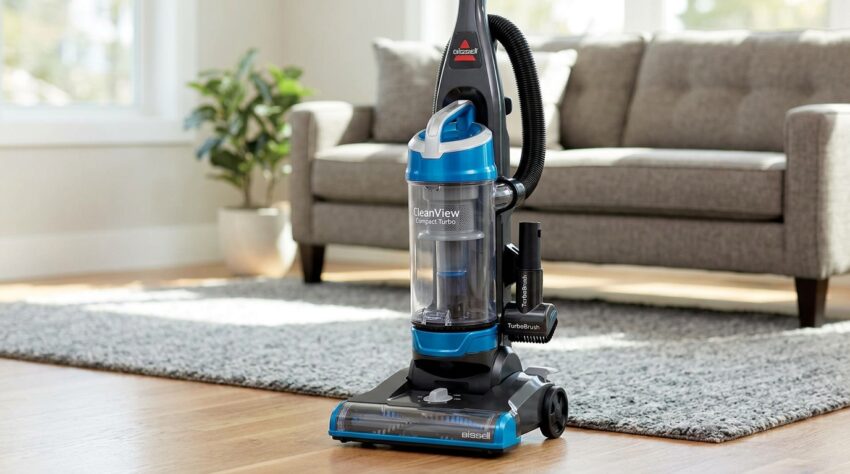
This guide looks at one such option: the Bissell CleanView Compact Turbo Upright Vacuum, model 3437F. We’ll go through what the machine is, how its main features work in everyday terms, how this kind of vacuum is commonly used, and what to weigh before deciding whether it suits your home. The goal is to inform rather than persuade, so you’ll find the trade-offs alongside the strengths.
What Is the Bissell CleanView Compact Turbo?
The 3437F is a corded, bagless upright vacuum. Bagless means that dust and debris collect in a dirt container that you empty into the trash, rather than in a disposable bag. Upright means the motor, brush head, and handle form a single vertical unit that you push across the floor.
Bissell, a floor care company with a long history in the United States, describes this model as combining a lightweight, compact build with strong suction. Retail descriptions emphasize that it’s meant for smaller spaces, with one listing specifically naming apartments and dorms. The brand also notes that it supports the Bissell Pet Foundation, a charity focused on homeless pets, with purchases tied to that mission.
Bissell makes several vacuums with similar names. The CleanView Compact, the CleanView Compact Turbo, the CleanView Rewind, and others all appear in listings, and the differences between them can be subtle. The 3437F is the Compact Turbo, and it’s worth confirming that the model number on a listing matches before you buy.
Key Features
Compact, Lightweight Design
The headline feature is size. Retail listings describe the unit as weighing about 10 pounds, which is notably lighter than many full-size uprights. Dimensions are listed at roughly 10 inches deep, 12 inches wide, and 41 inches tall, though figures can vary slightly between sources. A lighter machine is easier to carry up and down stairs, easier to lift into a closet, and less tiring to push for people who don’t want to wrestle with a heavy appliance.
Lightweight designs involve trade-offs, which we’ll discuss later. In general, a smaller body can mean a smaller dirt container and a narrower cleaning path, which affects how quickly you cover a large room.
Turbo Power in a Small Package
Bissell describes the machine as offering “full size power” in a compact design. That phrase is marketing language, and it’s best understood as the brand’s way of saying that suction was a priority despite the smaller size. A retailer listing gives the power as 700 watts at 7.2 amps, which is a modest figure compared with larger uprights, though third-party listings don’t always match the manufacturer’s specifications. How well any vacuum cleans depends on more than wattage, including airflow design, brush quality, and how well it’s maintained.
Scatter-Free Technology
On hard floors, some vacuums can flick light debris, such as dry pet food or cat litter, across the surface before picking it up. Bissell’s Scatter-Free Technology is meant to reduce that. The brand says it captures dry debris with less scatter on hard floors. Results depend on the type of debris and the floor, but it’s a useful design consideration in homes with a mix of carpet and hard floors.
Quick Release Extension Wand
The 3437F includes a quick-release extension wand. In practical terms, this lets you detach a hose and wand from the machine to clean above the floor, such as on stairs, upholstery, curtains, or shelves, and then reattach it to carry on with floor cleaning. Retail copy describes it as letting you clean on and above floors. Because the machine is lightweight, it’s easier to carry around while using the wand than a heavier upright would be.
Pet TurboBrush Tool
The listing includes a Pet TurboBrush tool, which is a small handheld attachment with a powered brush designed to lift hair and debris from stairs, furniture, and upholstery. It’s the kind of attachment that comes in handy for sofa cushions, pet beds, and carpeted stairs. As with any handheld attachment, it works on a limited area at a time, so it’s best for targeted jobs instead of whole rooms.
Other Tools
Retailer descriptions mention a dusting brush and a crevice tool in addition to the TurboBrush. Accessories can differ by seller and bundle, so check what’s included in the specific listing.
Edge-to-Edge Cleaning
Bissell advertises edge-to-edge cleaning, which refers to a head designed to reach along baseboards and corners. Dust and pet hair collect along walls, so a nozzle that can get close to the edge is a practical advantage. Actual performance depends on the angle and the type of floor.
Push-Button Dirt Disposal
Listings describe disposing of debris with the push of a button. The idea is to make emptying less messy: you hold the container over a bin and release the contents. As always, emptying the container carefully helps keep dust from drifting back into the room.
Dirt Container Capacity
One retailer listing gives the capacity as about one liter. Figures may vary between sources, so check the manual if capacity matters to you. A smaller container fills faster, which means you may empty it more often than you would with a large-capacity machine, especially in homes with a lot of shedding or when cleaning a heavily soiled floor.
Filter
A retailer listing describes the filter type as foam. Maintenance instructions differ by model, and the manual is the best place to learn how often to rinse or replace it. A clogged filter is one of the most common reasons a vacuum seems to lose suction, so it’s worth building filter care into your routine.
Cord and Handling
The cord is listed at about 25 feet, which covers a good-sized room before you need to switch outlets. A corded design offers constant power without worrying about battery life, though you’ll be managing the cable as you move from room to room.
How It Can Be Used
Features matter only when they fit real routines. Here’s how a compact upright like this tends to be used.
Small Apartments and Studios
The size and weight are well suited to compact living spaces. It’s easier to store in a narrow closet than a big upright, and it’s light enough to move between rooms without much effort. In a small space, the narrower head is less of a drawback because you aren’t covering large areas.
Dorm Rooms and Shared Housing
Retailer listings name dorms specifically. A compact vacuum can be useful for students or anyone sharing a space who needs a basic tool for carpets, area rugs, and hard floors without taking up much room.
Carpet and Hard Floor Mix
The machine is described as multi-surface. For homes with a combination of area rugs and hard floors, a single vacuum that handles both saves switching tools. Scatter-free technology is aimed at the hard floor side of that equation. For delicate floors, check the manual about the brush roll and any adjustment options.
Stairs
Stairs are awkward for any vacuum. A lightweight machine with a quick-release wand lets you carry the unit to the stairs and clean the treads with the handheld tool, though it still takes care. Keep one hand free for the railing and avoid awkward balancing acts.
Furniture and Upholstery
With the wand and TurboBrush attached, you can address sofas, chairs, and cushions where crumbs and pet hair collect. The crevice tool helps in seams and between cushions.
Pet Hair
The model is marketed with pet-oriented features, including the Pet TurboBrush and scatter-free technology. Pet hair behaves differently depending on the animal, the floors, and the season. Expect to clean the brush roll periodically, as hair can wrap around it on any vacuum.
Quick Cleanups
A lightweight upright is easy to grab for a fast pass after a meal, a cooking session, or a muddy-shoes moment. The lower effort required can make people more likely to vacuum often, which is its own kind of benefit.
Everyday Tips
- Empty the dirt container before it’s completely full.
- Check and clean the filter according to the manual.
- Remove tangled hair or threads from the brush roll regularly.
- Move slowly over carpet so the brush has time to work.
- Use the wand and tools for stairs and furniture instead of forcing the main head into awkward spaces.
- Keep the cord clear of the path to avoid snags.
Who It May Be Suitable For
No vacuum suits everyone, but some situations line up well with this model’s design.
Apartment and condo dwellers. Smaller floor plans and limited storage fit a compact upright.
Students and renters. A basic, lightweight machine can cover everyday cleaning without a large footprint.
People who find heavy vacuums tiring. A lighter unit reduces the physical effort of pushing and carrying.
Households with a mix of floor types. Multi-surface capability and scatter-free design suit homes with both rugs and hard floors.
Pet owners with modest needs. The Pet TurboBrush and edge cleaning are aimed at this audience, though heavy shedding may call for a more robust setup.
Anyone wanting a simple, corded vacuum. No battery, no app, and a straightforward design suit people who prefer minimal complexity.
It may be less suitable for large homes where a wide head and a big dirt container would save time, for people who want advanced features like sealed HEPA filtration or powered detachable pods, or for anyone who prefers cordless convenience.
Important Things to Consider
A balanced look at any appliance includes its limits. Before choosing, think through the following.
Capacity. A one-liter container is modest. In a larger home or a house with heavy shedding, you may be emptying it more than once per cleaning session.
Cleaning path. Listings describe a cleaning path of about 10 inches. A narrower head means more passes to cover the same area, which can add time in big rooms.
Power ratings and specs. Third-party listings cite figures like 700 watts and 7.2 amps, but numbers can differ between sources. Confirm key specifications with the manufacturer’s information.
Filtration. The filter is described as foam, and the listings don’t mention a HEPA filter. If advanced filtration is a priority, consider whether this model meets your needs.
Compact trade-offs. A smaller, lighter machine usually means a smaller bin and fewer premium features than larger uprights.
Corded operation. A cord provides consistent power but means moving between outlets and managing cable placement.
Noise. Uprights are generally loud, and published noise figures for this model aren’t consistent across sources. If noise matters, look for the manufacturer’s information.
Model confusion. Bissell sells many CleanView variants, and names are close enough that it’s easy to mix them up. Confirm that you’re looking at 3437F.
Manufacturer claims. Statements about full-size power, scatter-free performance, and edge-to-edge cleaning come from marketing materials. Real results depend on your floors, your habits, and maintenance.
Maintenance. Bagless vacuums require regular emptying, filter care, and brush roll checks. Skipping these steps reduces performance.
Warranty and support. Warranty terms vary by seller and region. Check what applies to your purchase and how to reach customer support.
How It Compares With Other Appliance Categories
Rather than compare individual brands, it’s more helpful to see how a compact corded upright fits among the main types of vacuum.
Compact Uprights vs. Full-Size Uprights
Full-size uprights typically offer wider heads, larger dirt containers, and more features, but they’re heavier and need more storage space. Compact uprights give up some capacity and coverage in exchange for portability and convenience. If your home is small, the trade-off often favors the compact option.
Corded Uprights vs. Cordless Stick Vacuums
Cordless sticks are light and handy for quick cleanups, with no cord to manage. Battery life and smaller bins are the usual trade-offs. Corded uprights provide continuous power and generally lower ongoing costs, since there’s no battery to replace. Many households use both.
Uprights vs. Canister Vacuums
Canisters separate the motor and dust container from the cleaning head, connected by a hose. They’re often easier on stairs and under furniture. Uprights are quick to grab and tend to suit carpet well. A compact upright with a wand attempts to blend some canister-style flexibility.
Uprights vs. Robot Vacuums
Robots handle daily floor maintenance on a schedule. They generally don’t replace a full manual cleaning, especially on thick carpet, stairs, or upholstery. Pairing a robot with a conventional vacuum is common.
Uprights vs. Handheld Vacuums
Handhelds are small and ideal for spills and car interiors, but they’re not meant for whole-room cleaning. The wand and tools on a compact upright cover some of that ground.
Foam Filters vs. HEPA Filters
Foam filters capture larger particles and are typically washable. HEPA filters are designed to capture much finer particles and are often paired with sealed systems. If allergy concerns are central, HEPA is worth looking for. For general household use, foam filtration is common in affordable uprights.
Bagless vs. Bagged Models
Bagless vacuums avoid ongoing bag costs and let you see how full the container is, but emptying can release dust if done carelessly. Bagged models make disposal cleaner but require replacement bags.
Frequently Asked Questions
How heavy is the CleanView Compact Turbo?
Retail listings describe it as weighing about 10 pounds. Figures may vary slightly between sources, so check the specific listing.
Is it bagless?
Yes, it’s a bagless upright, so dirt collects in a container that you empty.
Does it work on carpet and hard floors?
It’s described as multi-surface, and the scatter-free feature is aimed at hard floors. Check the manual for guidance on delicate surfaces.
What tools are included?
Listings mention a Pet TurboBrush tool, a dusting brush, and a crevice tool. Accessories can vary by seller, so confirm the contents.
What is Scatter-Free Technology?
It’s Bissell’s term for a feature designed to capture dry debris on hard floors with less scatter than a standard brush roll.
How long is the cord?
Listings give the cord length as about 25 feet.
Does it have a HEPA filter?
Retail listings describe the filter as foam and don’t mention HEPA. Check the manual or manufacturer’s information if filtration is a priority.
How big is the dirt container?
One listing describes the capacity as about one liter. Check the manual for the exact figure.
Is it good for stairs?
The quick-release wand and Pet TurboBrush tool are designed for stairs and above-floor cleaning. Care is needed when carrying the machine and using the wand on steps.
Is it good for small spaces?
The compact size and light weight are aimed at apartments, dorms, and small homes, according to retailer descriptions.
Final Thoughts
The Bissell CleanView Compact Turbo 3437F is a corded, bagless upright vacuum built around a few clear ideas: a light, compact body, Scatter-Free Technology for hard floors, a quick-release extension wand for above-floor cleaning, edge-to-edge cleaning, and a Pet TurboBrush tool for furniture and stairs. It sits at the simpler, more affordable end of the upright spectrum.
Whether it suits you depends on your home. For apartments, dorms, and small households that want an easy-to-handle vacuum for everyday cleaning, a compact upright like this is worth a closer look. For large homes, heavy shedding, or anyone who wants sealed HEPA filtration and premium features, a bigger or more advanced model may be a better match.
Before deciding, confirm the model number and accessories on the listing, read the manufacturer’s manual, and look at a range of customer feedback to understand both strengths and limits in everyday use. Specifications and listings change over time, so it’s smart to double-check the current details.