Disclosure: As an Amazon Associate, we earn from qualifying purchases. This article is for educational purposes and draws on publicly available product information rather than hands-on testing.
Anyone who shares a home with a dog or a cat knows that pet hair has a way of showing up everywhere. It collects along baseboards, embeds itself into rugs, clings to couch cushions, and drifts into corners within a day of being cleaned up. A vacuum that handles ordinary dust may still struggle with that sort of mess, which is why a whole category of “pet” vacuums exists. Some are premium machines with a long list of extras. Others take a simpler approach and focus on a handful of practical features at a more modest level.
This guide looks at one of the simpler ones: the Bissell CleanView Swivel Pet Upright Vacuum, model 2252. We’ll go through what it is, how its main features work in everyday terms, the ways people typically use this kind of vacuum, and what to think about before deciding whether it fits your home. The goal is to inform rather than push a purchase, so you’ll find trade-offs here alongside the strengths.
What Is the Bissell CleanView Swivel Pet 2252?
The 2252 is a corded, bagless upright vacuum. “Bagless” means the dirt collects in a clear tank that you empty into the trash instead of a disposable bag. “Upright” means the motor, brush head, and handle form one vertical unit that you push across the floor.
Bissell, an American floor care company, markets the CleanView Swivel Pet as an affordable machine designed for homes with pets. The brand describes it as combining swivel steering, a specialized brush roll, a large-capacity dirt tank, and pet-oriented tools carried right on the machine. It also notes that it supports the Bissell Pet Foundation, a charity focused on homeless pets, with purchases tied to that mission.
A quick note on naming: Bissell sells several related CleanView models, including versions with automatic cord rewind or extension wands. Those have different model numbers and slightly different features. Listings can look similar at a glance, so confirm that the model number reads 2252 and check what’s included in the box before buying.
Key Features
Swivel Steering
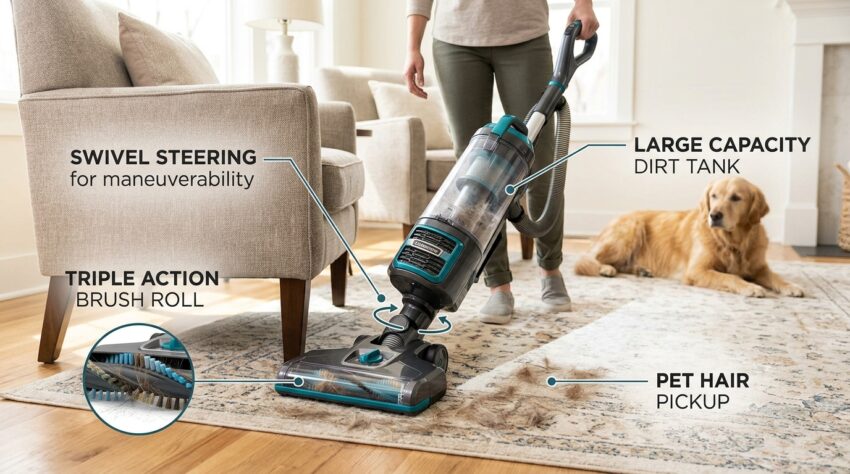
Swivel steering is the feature in the model’s name. The idea is that the cleaning head pivots as you turn the handle, which lets the vacuum glide around furniture legs, around corners, and under low obstacles without needing to be dragged or lifted. The brand describes it as giving maximum maneuverability for getting around and under furniture and other obstacles.
In practice, swivel steering tends to matter most in rooms with a lot going on: dining chairs, coffee tables, pet beds, and the like. In a mostly open space, the difference may feel smaller. Either way, it’s one of the main reasons people compare this style of upright with a traditional fixed-head design.
Triple Action Brush Roll
The brush roll is the spinning bar at the base that agitates the floor surface. Bissell’s Triple Action Brush Roll is described as loosening, lifting, and removing embedded pet hair. In plain terms, it uses a combination of bristle types and shapes to work on different layers of debris at once, rather than one uniform brush pattern.
Pet hair is stubborn for a few reasons. It tangles, it clings to fibers, and it can wrap around the brush roll itself. A multi-part brush design is the manufacturer’s answer to that. How well it works depends on your floors and your pets. Long hair, short hair, and shedding seasons can behave very differently, and even the best brush roll needs periodic cleaning. Expect to check it and clear tangled hair now and then, whichever vacuum you use.
Large-Capacity Dirt Tank
The dirt tank is described as large capacity and easy to empty. Actual capacity numbers vary by source. One third-party spec comparison lists about one liter, but figures differ between listings and related models, so check the manual or the manufacturer’s page for the correct number. A bigger tank means fewer trips to the trash, which is helpful in homes where pet hair fills a canister quickly. It’s still a good habit to empty it before it’s completely full, because a packed tank can reduce airflow.
Emptying is generally done over a trash can, and releasing the contents carefully helps keep dust from drifting back into the room.
Scatter-Free Technology and Edge Cleaning
Listings describe the 2252 as having scatter-free technology for dry messes on hard surfaces. Many vacuums can flick light debris like cat litter or dry food across a hard floor before picking it up. The scatter-free approach is meant to reduce that. The brand also promotes edge-to-edge cleaning, intended to help tackle pet hair, dirt, and debris along baseboards and in corners.
As with all such claims, the real-world result depends on the debris, the floor, and how you move the machine. Slow, overlapping passes tend to help on any vacuum.
Specialized Pet Tools
The listing mentions specialized pet tools carried on board, including the Pet TurboEraser tool, which is designed for stairs, upholstery, and similar surfaces. A TurboEraser-style tool is a small handheld attachment with a powered brush that agitates fabric to pull hair from it. It’s useful for couches, pet beds, car seats, and stair treads, though it typically works on a limited area at a time.
Accessory lists can vary by seller and bundle, so check what’s included. Some retailer bundles add extra items.
Filtration and Maintenance
One listing notes that the filter should be replaced every six months. Maintenance schedules vary with use, and homes with heavy shedding may want to check filters more often. The manual will tell you which parts are washable or replaceable and how often each should be serviced. Skipping filter care is one of the most common reasons a vacuum seems to lose power over time.
Weight and Handling
One third-party comparison lists the machine at around 12.5 pounds, which is lighter than many uprights, although figures differ between sources. A lighter body is easier to carry up stairs and push through a long cleaning session. Always confirm the weight and dimensions on the specific listing.
Cord and Power
Cord length and wattage aren’t consistently listed across the sources for this exact model, and related models have different cord setups, including automatic rewind versions at around 27 feet. Check the specifications for the 2252 specifically so you know how many outlets you may need to use in a larger room.
Starting Out
New heating or motor-driven appliances can sometimes give off a faint odor during the first few uses, often described as warm plastic. This is common and generally fades. Following the setup steps in the manual and making sure the area is ventilated is a sensible precaution.
How It Can Be Used
A feature list is only useful if it fits actual routines. Here’s how this kind of vacuum tends to be used in everyday homes.
Carpets and Rugs
With the brush roll spinning, the vacuum is well suited to carpeted bedrooms, living rooms, and area rugs. Pet hair embedded in fibers usually takes more than one pass, so working in slow, overlapping strokes is a good habit. Height adjustments, if your model has them, help the brush roll make proper contact with different pile depths.
Hard Floors
Bissell markets multi-surface cleaning with scatter-free technology for dry messes on hard floors. Hardwood, tile, and laminate collect pet hair, dust, and stray litter, and a vacuum that can handle both carpet and bare floor saves switching machines. If your floors are delicate, check the manual about brush roll use, since a spinning brush can be rough on some surfaces.
Stairs and Upholstery
The Pet TurboEraser tool is designed for stairs and upholstery. Sofa cushions, chair seats, and the carpeted stair treads where pets love to nap are classic hair magnets. Using a powered mini brush on these areas tends to work better than the main floor head.
Pet Beds and Blankets
Pet bedding collects hair, dander, and dirt. A quick pass with an upholstery tool between washes can help keep it manageable, though it doesn’t replace laundering.
Car Interiors
If your vehicle sees plenty of pet travel, a vacuum with handheld tools can be carried out for seats and mats. The cord length limits how far the machine can go, so you’ll likely need an outdoor outlet or a properly rated extension cord.
Baseboards, Corners, and Edges
Edge-to-edge cleaning is aimed at the places where hair and dust collect against walls. Using the crevice or corner tools, if included, can help along baseboards and under furniture.
Everyday Tips
- Empty the dirt tank before it’s completely full.
- Check and clear the brush roll regularly, especially in homes with long-haired pets.
- Follow the manual’s filter cleaning and replacement schedule.
- Move slowly over carpet to give the brush time to work.
- Turn off or adjust the brush roll on delicate floors if the model allows it.
- Use handheld tools on furniture and stairs instead of forcing the main floor head into awkward spots.
Who It May Be Suitable For
No vacuum suits everyone, but some situations line up well with the 2252’s design.
Pet owners on a budget. The model is built around pet hair features at a more modest tier than premium machines, which can appeal to people who want a focused tool rather than a long list of extras.
Households with a mix of carpet and hard floors. A single upright that handles both surfaces keeps things simple.
Small to medium homes and apartments. A moderate-weight, corded upright works well when you don’t have to plug in at the opposite end of the building.
People who like swivel maneuverability. Rooms with lots of furniture benefit from a head that pivots easily.
First-time vacuum buyers or people replacing an older upright. The controls and design are straightforward, which can be a plus for anyone who prefers uncomplicated appliances.
It may be less suitable for people who want a cordless machine, who need a very large capacity for big homes, who prefer sophisticated features like smart sensors or automatic cord rewind, or who have mobility limitations and need an ultra-light stick vacuum.
Important Things to Consider
A balanced look at any appliance includes its limits. Before choosing, think through the following.
Model confusion. Bissell sells many CleanView variants, and names are close enough that it’s easy to mix them up. Cord rewind, extension wands, and different accessory sets belong to other model numbers. Confirm that you’re looking at the 2252.
Inconsistent specifications. Weight, tank capacity, and noise figures vary between sources, and some come from third-party comparison sites instead of the manufacturer. Treat those numbers as approximate and verify them in the manual or on the brand’s page.
Corded operation. A cord gives unlimited runtime but means moving between outlets and managing a trailing cable. Check the length for your space.
Pet hair realities. No vacuum eliminates pet hair maintenance. Brush rolls get tangled, filters clog, and shedding seasons can overwhelm any machine. A brush roll that is easy to access and clean is a practical advantage.
Noise. Uprights are generally loud. A third-party source describes the 2252 as around 80 decibels, comparable to many standard uprights, but that figure isn’t a manufacturer specification. If noise matters to you, check official data or consider models designed to be quieter.
Lighting and extras. Some third-party comparisons note that this model lacks certain conveniences, such as headlights for dim areas. If dark corners are a concern, consider whether that matters to you.
Initial odor. A faint smell on first use is common with new appliances and typically fades, but ventilate the room.
Maintenance. Bagless vacuums need regular tank emptying, filter care, and brush roll checks. Skipping those steps reduces performance.
Storage. Uprights take up floor space in a closet or corner, so measure before buying.
Manufacturer claims. Statements about embedded pet hair removal, scatter-free cleaning, or maximum maneuverability are based on the brand’s own descriptions. Results vary by floor type, pet type, and technique.
Warranty and support. Warranty terms can vary by seller and region. Check what’s covered and how to contact customer service.
How It Compares With Other Appliance Categories
Rather than comparing individual brands, it’s more helpful to see how a corded pet upright fits among the main vacuum types.
Corded Uprights vs. Cordless Stick Vacuums
Cordless sticks are light and handy for quick cleanups, with no cord to manage. Battery life and smaller bins are the usual trade-offs. Corded uprights offer continuous power and larger capacity but are tethered to outlets. Many homes use both: a stick for daily touch-ups and an upright for deeper cleaning.
Uprights vs. Canister Vacuums
Canisters separate the motor and dirt container from the cleaning head. They’re often easier on stairs and under furniture, though they can be more awkward to store and drag around. Uprights are quick to grab and tend to suit carpet well.
Uprights vs. Robot Vacuums
Robots handle daily floor maintenance on a schedule, which suits homes with constant shedding. They don’t typically replace a full manual vacuuming, especially on thick carpet, stairs, or upholstery. Pairing a robot with a conventional vacuum is common.
Pet-Specific vs. General-Purpose Vacuums
Pet-oriented models emphasize features like specialized brush rolls, small powered tools, and easy-clean designs. General-purpose vacuums may have similar hardware without the pet branding. The label matters less than whether the machine handles hair, is easy to maintain, and fits your floors.
Bagless vs. Bagged Models
Bagless vacuums avoid replacement bags and show you how full the tank is, but emptying can release dust if done carelessly. Bagged models make disposal cleaner but require ongoing bag purchases. It’s a matter of preference.
Uprights vs. Handheld Vacuums
Handhelds are great for spills, car interiors, and quick jobs, but they’re not meant for whole-room cleaning. On-board handheld-style tools on an upright cover some of that ground.
Frequently Asked Questions
What does “Swivel” mean in the name?
It refers to swivel steering, where the cleaning head pivots as you turn the handle, making it easier to guide the vacuum around furniture and obstacles.
What is a Triple Action Brush Roll?
It’s Bissell’s name for a brush roll with a combination of bristle types designed to loosen, lift, and remove embedded pet hair. The exact design is described in the manufacturer’s materials.
How big is the dirt tank?
Listings describe it as large capacity. One third-party source lists about one liter, but figures vary, so check the manual or manufacturer’s page for the correct number.
Is it good for pet hair?
It’s marketed for pet hair pickup, with a specialized brush roll and pet tools. As with any vacuum, results depend on floor types, pet hair length, and maintenance, and brush rolls need periodic cleaning.
Can I use it on hardwood floors?
Listings describe multi-surface cleaning, including hard floors, with scatter-free technology for dry messes. Check the manual for guidance on delicate surfaces.
What tools come with it?
Listings mention specialized pet tools, including the Pet TurboEraser tool. Accessories can vary by seller or bundle, so check the listing.
Is it bagless?
Yes, it’s a bagless upright, so dirt collects in a tank that you empty.
How often should I replace the filter?
One listing mentions replacing the filter every six months. Maintenance schedules depend on use, so follow the manual and check the filter more often if you have heavy shedding.
Is it loud?
Uprights are generally loud. A third-party source puts the 2252 at around 80 decibels, but that isn’t an official specification.
Does it have automatic cord rewind?
No. Cord rewind is a feature of related CleanView models with different model numbers. Check the specification for the 2252 before assuming.
Final Thoughts
The Bissell CleanView Swivel Pet 2252 is a corded, bagless upright vacuum built around a few clear ideas: swivel steering for easier maneuvering, a Triple Action Brush Roll aimed at embedded pet hair, scatter-free and edge cleaning, a large easy-empty dirt tank, and on-board pet tools like the Pet TurboEraser. It sits toward the simpler, more affordable end of the pet vacuum spectrum.
Whether it suits you depends on your home. For pet owners with a mix of carpet and hard floors who want a straightforward machine, a model like this is worth a closer look. For people who want cordless freedom, automatic cord rewind, or a long list of advanced features, a different type or model may fit better.
Before deciding, confirm the exact model number and what’s in the box, read the manufacturer’s manual, and look at a range of customer feedback to understand both strengths and limits in everyday use. Listings and versions change over time, so it’s smart to double-check the current details.